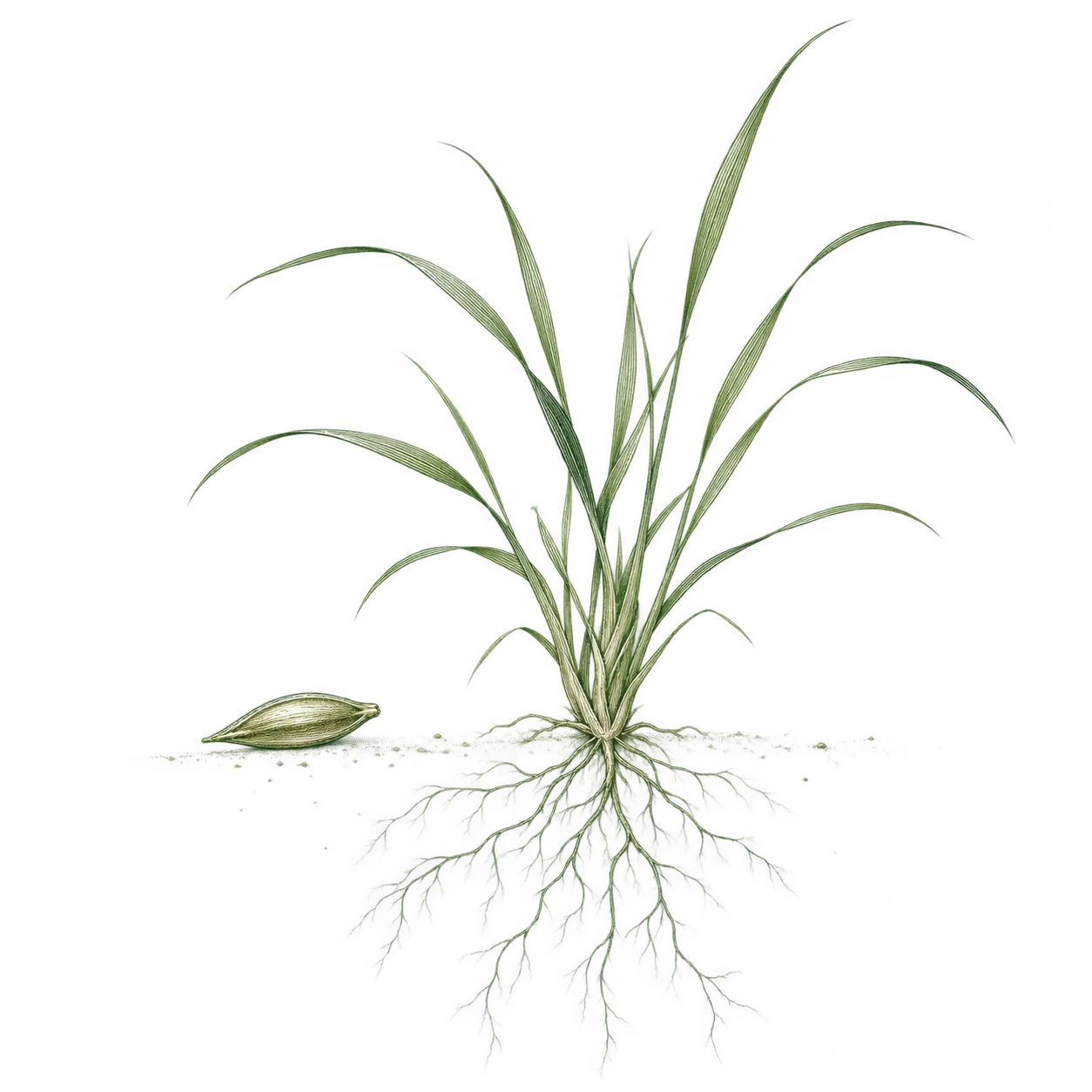
Generated illustration, not a photograph, planting depth, growth timeline or field measurement.
Start with the bag, not a generic rate.
New lawn and overseeding directions can differ. Check the exact bag and choose the instruction for the area you will actually treat.
There is another distinction worth getting right: packaged-product weight is already a material instruction. Pure live seed, or PLS, is a different basis. Applying a purity adjustment twice changes the instruction.
Illustrative geometry, not a surveyed property. Here the whole rectangle is the treatment area; exclude areas you will not seed.
A 7 lb bag covering 1,750 sq ft means 7 ÷ 1,750 × 1,000 = 4 lb per 1,000 sq ft.
Invented arithmetic, not a product recommendation. It applies only when the supplied coverage describes your job.
1Measure the treatment area.
2Read the matching instruction.
3Round up bags, not the application rate.
One job. A clear next step.
A bag count is only one decision. Separate the site problem, the method and the care that follows.
Repeating seed on the same failing strip does not identify why it is thin. Minnesota Extension notes that changes in care or site conditions may restore some lawns without renovation. Start there before buying more material.
For ordinary Minnesota overseeding, the preferred planning period is mid-August–mid-September. Dormant seeding instead intends seed to wait for spring; check the method's actual soil conditions, not just a date.
The soil's condition is the target. Learn what changes between incomplete emergence, developing seedlings and established care, including what rain changes.
Surface moisture first
Gradually change the pattern
Schematic stages, not measured root growth or a fixed schedule.
Retained grass can shade emerging seedlings. A bare new patch has its own first-cut decision. A number of days since seeding does not describe both.
Two areas. Two records.
Note the retained canopy separately from the new patch. Check growth, the intended height and the ground before planning a pass.
Method-specific context matters. The guide distinguishes established, overseeded and bare seeded areas.
Built on extension guidance. Clear about its limits.
Regional guidance, label arithmetic and conditions still to check are kept separate. No live weather, field tests, seed rankings or guaranteed results are claimed. Every guide links its sources.